Image Slider

Showing posts with label quote. Show all posts

Zadie Smith on Libraries

| On
Monday, November 12, 2012
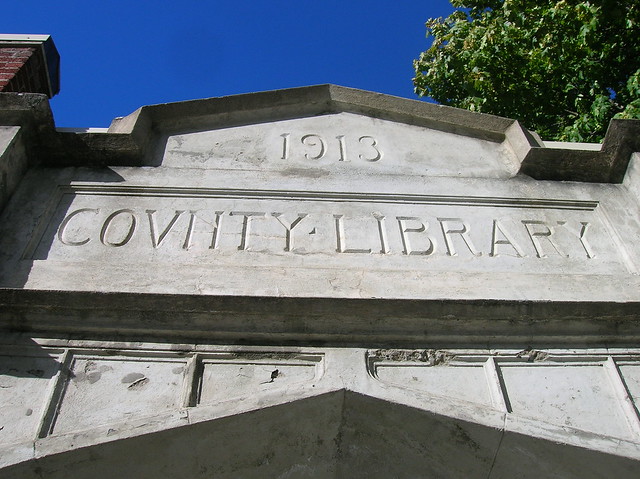
county library


"Well-run libraries are filled with people because what a good library offers cannot be easily found elsewhere: an indoor public space in which you do not have to buy anything in order to stay. In the modern state there are very few sites where this is possible. The only others that come readily to my mind require belief in an omnipotent creator as a condition for membership. It would seem the most obvious thing in the world to say that the reason why the market is not an efficient solution to libraries is because the market has no use for a library. But it seems we need, right now, to keep re-stating the obvious. There aren’t many institutions left that fit so precisely Keynes’ definition of things that no one else but the state is willing to take on. Nor can the experience of library life be recreated online. It’s not just a matter of free books. A library is a different kind of social reality (of the three dimensional kind), which by its very existence teaches a system of values beyond the fiscal."

I love this quote and thought it was timely since our Library District here in Portland just passed - hooray! Our library is already good, the district gives more stability and with that the opportunity to be great. Despite the protestations of some, Amazon + Starbucks is not a replacement for the public library. I'm so glad voters in my city feel the same!


transformation defies any attempts to explain

| On
Friday, September 21, 2012
I'm almost done with this book and I'm enjoying it very much - so much that I'm in no hurry to finish because then it will be over. Half of the story takes place in Italy in the early 60s vaguely around the filming of Cleopatra, half takes place in present day Hollywood(ish). Usually when there's this kind of divide I prefer one setting over the other, but in this book it's so well balanced I'm happy to return to any set of characters.

Here's a quote from p. 93, describing Michael Deane ("the Deane of Hollywood"), now an old man struggling for relevance in the current business.
Suffice it to say that, upon meeting Michael for the first time, many people stare open-mouthed, unable to look away from his glistening, vaguely lifelike face. Sometimes they cock their heads to get a better angle, and Michael mistakes their morbid fascination for attraction, or respect, or surprise that someone his age could look this good, and it is this basic misunderstanding that causes him to be ever more aggressive about fighting the aging process. It's not just that he gets younger-looking each year, that's common enough here; it's as if he is somehow transforming himself, evolving into a different being altogether, and this transformation defies any attempts to explain it. Trying to picture what Michael Deane looked like as a young man in Italy fifty years ago, based on his appearance now, is like standing on Wall Street trying to understand the topography of Manhattan Island before the Dutch arrived.

the subtle curse

| On
Monday, April 16, 2012
Knowledge can be a subtle curse.  When we learn about the world, we also learn all the reasons why the world cannot be changed. We get used to our failures and imperfections. We become numb to the possibilities of something new. In fact, the only way to remain creative over time--to not be undone by our expertise--is to experiment with ignorance, to stare at things we don't fully understand. This is the lesson of Samuel Taylor Coleridge, the nineteenth century Romantic poet. One of his favorite pastimes was attending public chemistry lectures in London, watching eminent scientists set elements on fire. When Coleridge was asked why he spent so much time watching these pyrotechnic demonstrations, he had a ready reply. "I attend the lectures," Coleridge said, "so that I can renew my stock of metaphors." He knew that we see the most when we are on the outside looking in. 
-Jonah Lehrer, Imagine: How Creativity Works  from The Outsiders chapter. There are a million other things I could quote because it's a very quotable book, but this one jumped out.

first paragraph

| On
Saturday, February 04, 2012
I just started The Devil in the White City: Murder, Magic, and Madness at the Fair That Changed America. I was worried at first that I'd left this book too long - the meeting for my non-ficton book group is a week from Sunday and non-fiction (depending on subject) takes me longer to read than fiction. But after reading this first paragraph I don't think I'll have any problem. It all seems very exciting! This quote's not even the book proper, but an author's note at the very beginning.

Evils Imminent
(a note)
In Chicago at the end of the nineteenth century amid the smoke of industry and the clatter of trains there lived two men, both handsome, both blue-eyed, and both unusually adept at their chosen skills. Each embodied an element of the great dynamic that characterized the rush of America toward the twentieth century. One was an architect, the builder of many of America's most important structures, among them the Flatiron building in New York and Union Station in Washington, D.C.; the other was a murderer, one of the most prolific in history and harbinger of an American archetype, the urban serial killer. Although the two never met, at least not formally, their fates were linked by a single, magical event, one largely fallen from modern recollection but that in its time was considered to possess a transformative power nearly equal to that of the Civil War. 

Like I said: EXCITING. Can't you hear the movie trailer guy reading this?

Earlier today I finished The Magician King by Lev Grossman. It was so good! I'm still collecting my thoughts - right now they're bouncing around ("remember that part? so excellent!" etc.)  and I'm full of that good feeling a satisfying novel delivers.

all other swindlers

| On
Monday, January 16, 2012
kaleidoscope

Well, that was exciting. I was typing up the Dickens quote below when Busby wanted to go outside. I was certain the kitten was in another part of the house, so I was all "sure, Busby - take your time!" while I held the door open for him. You know what happens next - the kitten bolted out of god knows where and ran outside to sweet, sweet freedom. Both Busby and I went out after him and I finally managed to chase him in the right direction and he ran back in the house. Actually, I don't think I had anything to do with it; I think he freaked himself out and found the door through sheer dumb luck. At least his little feet are white so I could keep eyes on him as he hopped around in the cold, wet, dark like a deranged kitten/rabbit.

Back to Dickens -  one of the things I'm loving about this novel (Great Expectations) is his insight into persistent human nature.  This made sense in 1861 and it makes sense in 2012: we don't always tell ourselves the truth, and we KNOW IT. Not only do we know it, we invent self-deluding fictions to pretty it up. It's one of those curious conditions of humanity.
All other swindlers upon earth are nothing to the self-swindlers, and with such pretenses did I cheat myself. Surely a curious thing. That I should innocently take a bad half-crown of somebody else's manufacture is reasonable enough; but that I should knowingly reckon the spurious coin of my own make as good money! An obliging stranger, under pretense of compactly folding up my bank-notes for security's sake, abstracts the notes and gives me nutshells; but what is his sleight of hand to mine, when I fold up my own nutshells and pass them on to myself as notes! 

currently reading

| On
Monday, January 02, 2012
The Family Fang:

 The scar on his lip was less of a star and more of a wishbone or, more accurately, a horseshoe. Stars, horseshoes, wishbones. His scar was nothing but lucky symbols. Using the tube of antibiotic ointment, which would soon need to be expensively refilled, he dabbed the medicine on his cuts, which took some time and effort. When he was finished, Buster smiled at his reflection and saw that this made things worse. He returned to his seat, the aisles around him completely empty, everyone on the bus giving him a three-seat buffer in all directions. This was a kind of life he understood, a three-seat buffer whether he wanted it or not, time to think, whether he wanted it or not, traveling down the highway to someplace new, whether he wanted to or not. 

I was reading both this and Great Expectations, but the due date on T.F.F is coming quickly upon me, so I have to make it my one and only book for the time being. I'm enjoying it very much! Wes Anderson keeps coming up in reviews, but I don't think that's quite fair to either of them.  More on this when I finish. It's a strange and funny book.